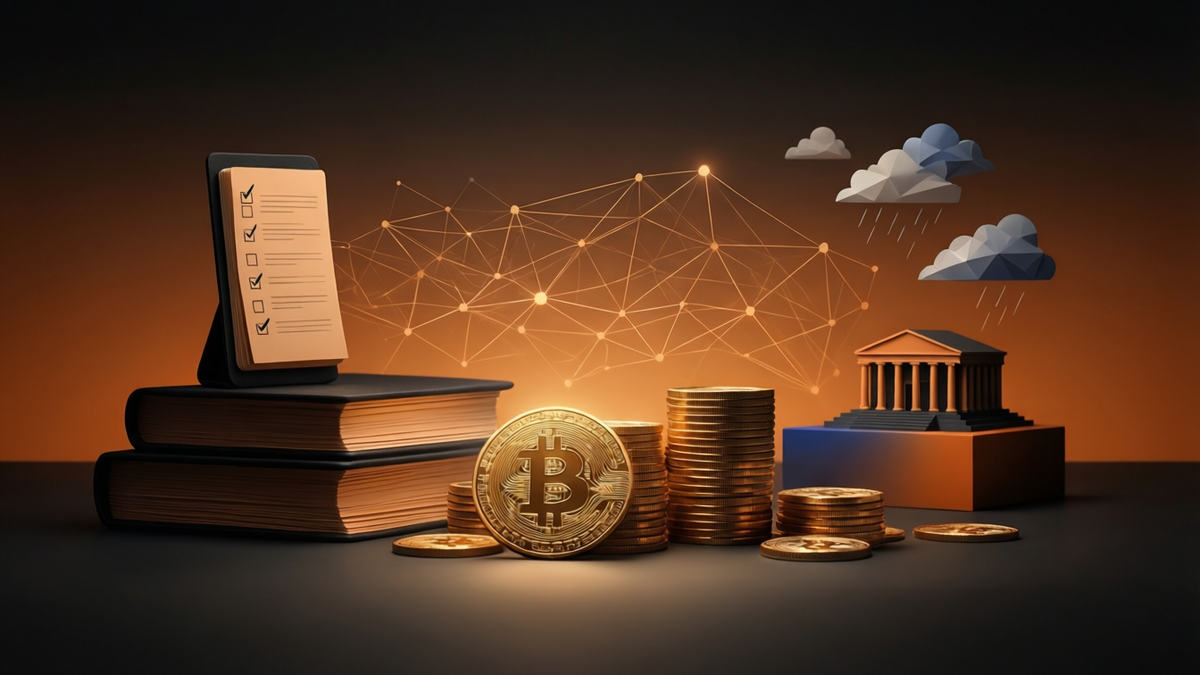
A verification-first checklist for on-chain and Lightning payments. The explanation separates Lightning channel behavior from final settlement on Bitcoin's base layer.
- Confirm whether the request is on-chain or Lightning.
- Check destination details on a trusted screen.
- Use a test payment when the cost of a mistake is high.
Identify the payment type
An on-chain address and a Lightning invoice are different payment instructions. Use a wallet that supports the requested rail and never assume text copied from a message is safe without confirming it with the recipient.
Verify amount and destination
Review the complete address or invoice on a trusted display, including amount and network. Malware can replace clipboard contents. For a new or high-value destination, a small test can be worth the extra fee.
Name the layer and the actor. Wallets create transactions, nodes check rules, miners propose blocks, and Lightning peers manage channels.
Choose fees deliberately
On-chain fee selection trades cost for expected confirmation speed; it is not a percentage tip to the recipient. Lightning quotes routing fees and usually resolves in seconds, but routes can fail and retry.
The steps, and where each can go wrong
Get the address from the recipient through a channel you trust — their website, an in-person QR code, or a call — not from an email or message that could be spoofed. Paste or scan it and compare the first and last several characters with the source; malware that swaps clipboard addresses exists.
Enter the amount and check the unit, since a wallet set to sats and one set to BTC differ by a factor of a hundred million. Choose a fee for the urgency you need. Review the summary screen, and on a hardware wallet read the device screen. Then send, and note the transaction ID.
Fees, timing and the mempool
The fee you pay buys position in the queue. Wallets estimate rates from recent blocks; the mempool explorer on this site shows the same data with the backlog behind it. For a payment that can wait a day, a rate well below the next-block estimate usually clears overnight. For an exchange deposit with a deadline, pay the next-block rate.
Leave replace-by-fee on so you can raise the fee if you guessed low. A payment that shows 'unconfirmed' is not lost; it is waiting, and it will either confirm or, after some days, drop out of mempools and return to your spendable balance.
After you send
The recipient sees the transaction within seconds as unconfirmed and can treat it as settled after the confirmations their policy requires — one for a coffee, several for a large transfer. Any block explorer will show it by transaction ID with its fee rate and confirmation count; share the ID rather than a screenshot if asked for proof.
Record what you sent, to whom, when and at what price if you keep tax records. If you sent to the wrong address, contact the owner if you can identify one; if it was a typo that passed the checksum, the coins are almost certainly unrecoverable, which is why the first test amount matters.
Test the payment path carefully
Use a small payment to learn how invoices, liquidity, routing, timeouts, and channel backups behave. Keep the on-chain recovery path clear before depending on a Lightning wallet.
Common questions
What happens if I send bitcoin to the wrong address?
The transaction cannot be reversed. If the address belongs to someone you can contact, you can ask for it back; if it is a typo that still passed the checksum, the coins are almost certainly gone. Always verify the first and last characters and send a small test amount for new recipients.
What fee should I choose?
Fees are quoted in satoshis per virtual byte and depend on how busy the mempool is, not on the amount sent. Check the current fee estimates, pick a rate for the confirmation time you need, and keep replace-by-fee enabled so you can raise it later if the network gets busier.
How do I know a payment arrived?
Once broadcast, the transaction appears in the recipient's wallet as unconfirmed; it is settled after it is included in a block. Any block explorer can show the transaction ID, its fee rate and its confirmation count.
Sources and further reading
Primary documents this guide draws on. Links open the original publisher.
- BIP 21: URI scheme Bitcoin Improvement Proposals
- BIP 173: Bech32 address format Bitcoin Improvement Proposals
- BIP 125: Opt-in full replace-by-fee signaling Bitcoin Improvement Proposals
- Developer guide: transactions developer.bitcoin.org